VR Construction Training for Safer, Job-Ready Crews
VR construction training lets crews practice site safety, heavy equipment and lifting operations in a realistic simulation before they do the work for real. People learn to spot hazards and follow procedures under realistic conditions, with no one on site exposed to risk while they learn.
Why is construction safety training hard to get right?
Because the riskiest construction tasks, such as working at heights, lifting and operating heavy equipment, are the hardest to practice safely. Crews change from project to project, sites change every week, and new workers often learn on live sites around live hazards.
- High-hazard work. Falls, struck-by and caught-between incidents happen on tasks that are dangerous to rehearse for real.
- Equipment time is expensive. Machines and operators used for training are not moving dirt or lifting loads.
- Transient crews. Subcontractors and new hires arrive with different levels of training and site knowledge.
- Every site is different. Generic orientation videos do not prepare people for this site's specific layout and hazards.
New to the technology? Start with VR Vision's guide to virtual reality training: what it is, what it costs and how to measure results.
How does VR Vision train construction crews?
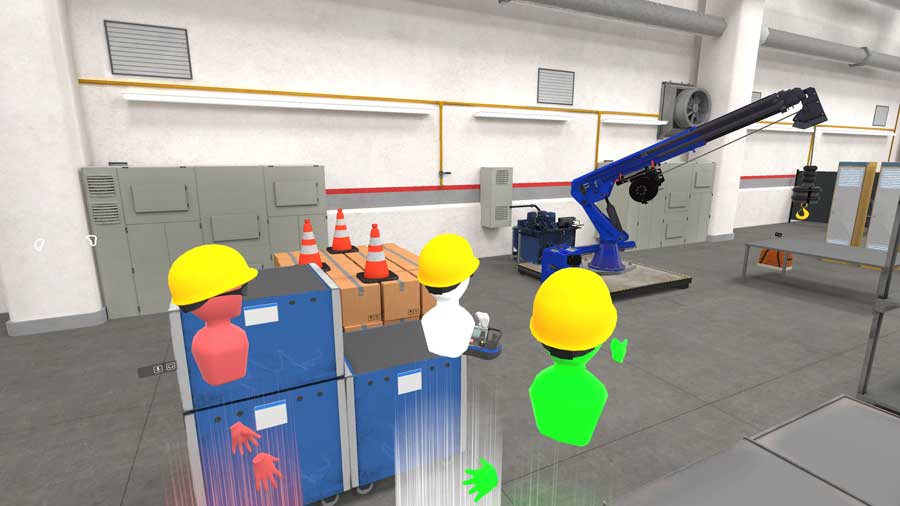
VR Vision builds simulations of your equipment, tasks and site conditions, then delivers them on standalone headsets that work in a site trailer or yard office. Crews practice hands-on, and Vision Portal records who has completed what before they start work.
Hazard recognition
Walk a realistic site and identify fall, struck-by, electrical and caught-between hazards before they cause an incident.
Heavy equipment familiarization
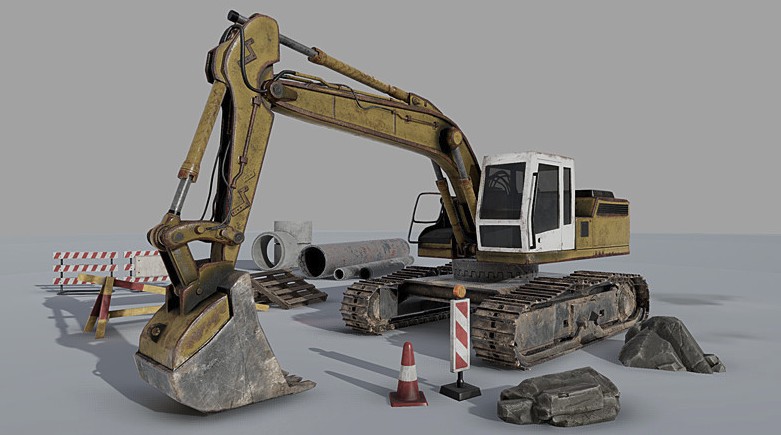
Controls, pre-use inspections and safe operating procedures on a virtual machine, before time in the real seat.
Cranes, rigging and lifting
Lifting and hoist operations practiced safely, using the same approach as Siemens Gamesa's global VR crane and hoist program.
Working at heights
Fall protection, anchor points and ladder and platform safety with realistic exposure and zero risk.
Equipment maintenance
Pre-use checks and maintenance procedures for construction equipment. See VR maintenance training.
Site-specific orientation
A digital walk-through of a specific project so crews know the layout, access routes and muster points on day one.
Crews train on Meta Quest 3S or PICO 4 Enterprise headsets, with hand tracking supported. VR Vision is an authorized Meta and PICO partner, so hardware, device management and support come from one team. Sessions are tracked in Vision Portal, which supports SSO, MFA, role-based permissions and an on-prem or air-gapped option, with LMS integration (SCORM 1.2/2004, xAPI) available on request.
Want to see your site or equipment in VR?
Book a DemoWhy do enterprise safety teams trust VR Vision?
VR Vision has spent 10+ years building training for high-hazard work, with more than 100 enterprise deployments for organizations including Toyota, Siemens, Coca-Cola, Hydro One and Toronto Hydro. The lifting and hoist training most relevant to construction comes from this program:
9 training modules, from classroom crane basics to offshore turbines, on hundreds of Meta Quest headsets.
Read the Siemens Gamesa case studyVR training on field tasks that are dangerous or hard to stage in real life, in use for three years.
Read the Toronto Hydro case studyHow is a VR construction training program delivered?
Licensed modules reach a field pilot in 1 to 2 months. Custom builds reach a pilot in 3 to 4 months. VR Vision handles content, headsets, deployment and support, so your team is not running a software project on the side.
Discovery
Pick the tasks that carry the most risk, cost or training time, and agree how success will be measured.
Build or configure
License existing modules or build custom simulations from your drawings, photos, video and work methods.
Pilot
Run the training with a real group of learners, collect Vision Portal data and refine the content with your SMEs.
Roll out and measure
Scale across sites, with completion, scores and error data tracked per learner.
Budgeting? A custom VR project typically runs $60K to $120K, and interactive 360 video runs $30K to $60K per module. Model your own payback with the VR training ROI calculator, or compare vendors with the Industrial VR Training Buyer's Guide.
VR construction training: frequently asked questions
What is VR construction training?
VR construction training uses virtual reality simulations of construction sites, equipment and tasks so workers can practice hazard recognition, equipment operation and high-risk procedures before doing them on a live site.
How is virtual reality used in construction safety training?
Workers walk a simulated site to identify hazards, practice fall protection and lifting procedures, and rehearse equipment inspections and operation. Mistakes lead to a reset instead of an injury, and every attempt is recorded.
Can VR be used for construction equipment training?
Yes. Equipment controls, pre-use inspections, maintenance steps and safe operating procedures can all be modeled so operators practice before time on the real machine.
How much does VR construction training cost?
A custom VR project from VR Vision typically costs $60K to $120K. Interactive 360 video costs $30K to $60K per module. Licensing existing modules, where they fit, is the fastest and lowest-cost way to start.
How long does it take to launch VR construction training?
Licensed modules reach a field pilot in 1 to 2 months. Custom builds reach a pilot in 3 to 4 months, depending on the number of tasks and how quickly subject matter experts can review content.
Does VR construction training work on a job site?
Yes. Training runs on standalone Meta Quest 3S or PICO 4 Enterprise headsets that need only a few square metres of space, so crews can train in a site trailer or yard office.
Train on the hazard before you face it
Book a 30-minute demo to see construction simulations and what a pilot for your crews would look like.