Custom VR applications built on our own SDK, three times faster than industry-standard timelines. One team takes you from site visit to headset, with milestone-based payments and an SLA after launch.




Fixed milestones, real integrations, and support that outlasts the launch. Here is what working with VR Vision looks like.
Milestone-based payments tied to your sign-off at each phase.
The Vision SDK is built for training scenarios, so builds skip months of groundwork.
Apps connect to your LMS, SSO, and MDM from the start.
Every deployment is backed by an SLA, not just a handoff.
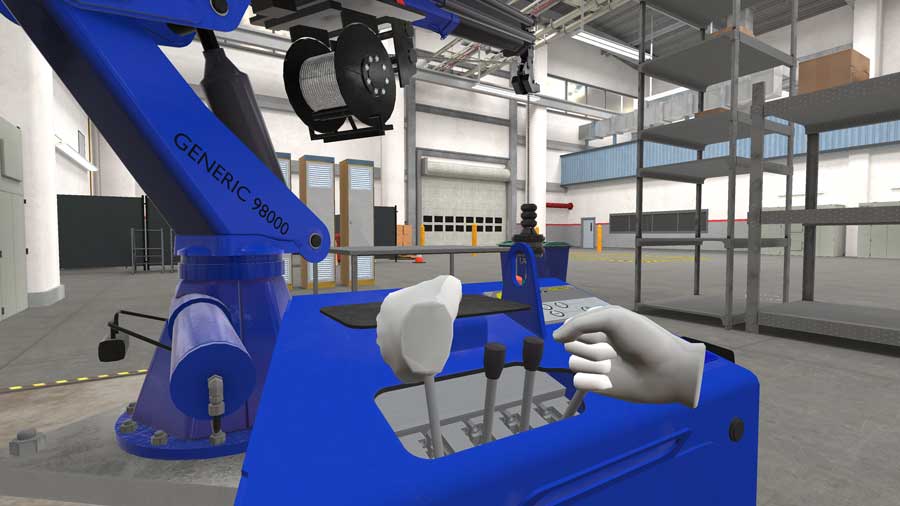
Fully interactive digital twins of your equipment, where learners pick up tools, follow each step, and see the consequences of a mistake.

Real footage of your people and sites in stereoscopic 360, with branching decisions, hotspots, and knowledge checks. Fast to produce.
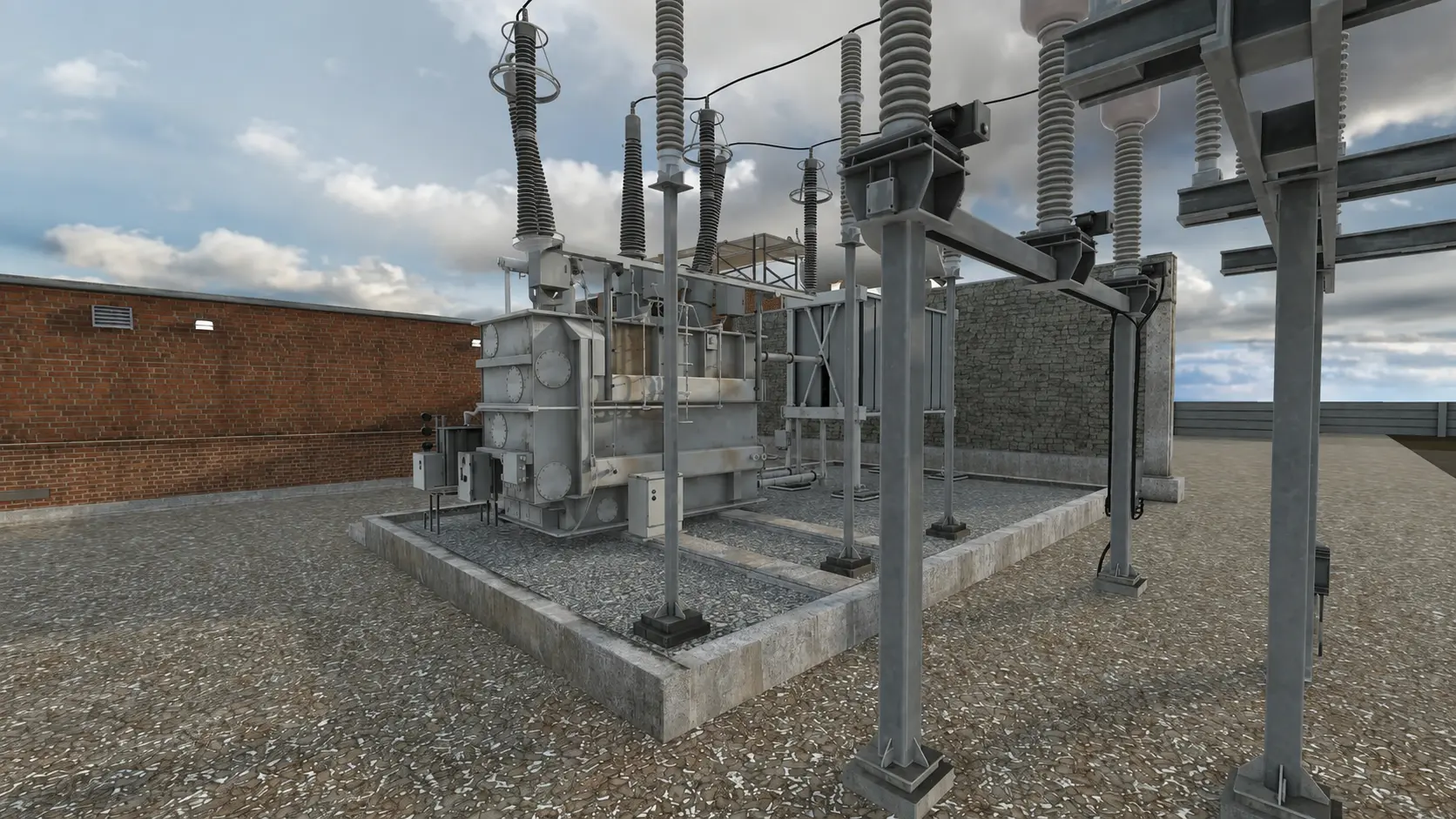
Your facility, machines, and tools rebuilt in 3D from CAD or BIM files, photogrammetry, or LiDAR, then optimized to run on standalone headsets.
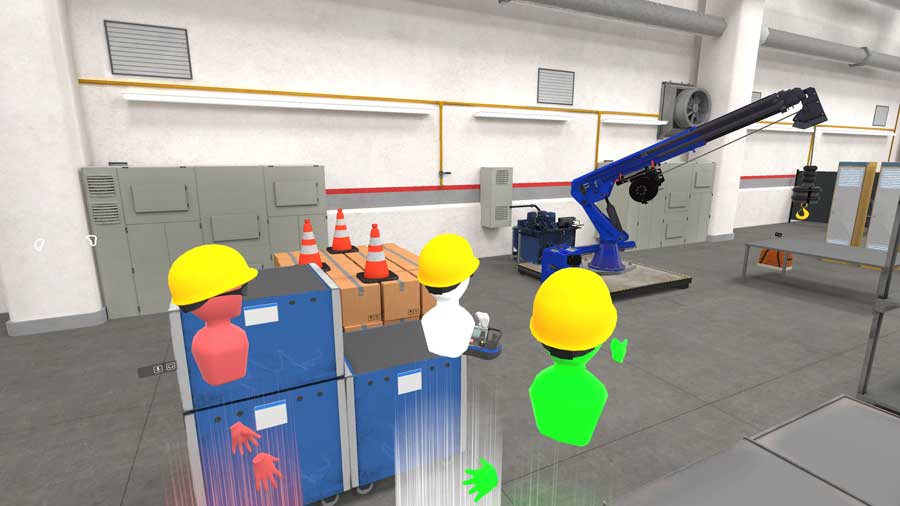
Our SDK powers both CGI and 360 builds three times faster than industry-standard timelines, including persistent multiplayer classrooms on standalone headsets.
A global VR training suite for wind technicians, from crane basics to offshore turbines.
Siemens Gamesa deployed hundreds of Meta Quest headsets across 10 global learning centers. VR Vision built nine modules on 1:1 simulations of cranes, hoists, and tools, with persistent virtual classrooms that trainers can open from anywhere, so technicians can train without travelling to remote or offshore sites.
An Agile team with your sign-off at every milestone. Most enterprise builds take 12 to 24 weeks.
After an on-site visit and document transfer, we deliver an Application Design Document and a milestone schedule.
3D blockouts or 360 videos are set up, and the main interactions are scoped and tested with your team.
All training modes are completed, QA and revisions are applied, and your LMS and Vision Portal are connected.
The app is uploaded to your MDM and handed off, then supported with unlimited bug fixes and 99.97% uptime.

Applications are built in Unity on OpenXR, networked with Photon, and backed by AWS for save states, analytics, and integrations. Every deployment plugs into Vision Portal for live sessions, recordings, and reporting.
Estimate the savings and payback for your own training program.
Go deeper than this page: hardware selection, Unity vs Unreal, OpenXR, architecture, performance, and the full enterprise deployment framework.
Virtual reality development is the process of designing, engineering, and deploying immersive VR applications for enterprise use: building 3D environments or 360 video, programming interactions, integrating analytics, and deploying to headsets. VR Vision has run this process for more than a decade for energy, utility, manufacturing, and automotive teams, with an iterative, collaborative approach that keeps your subject matter experts involved from scope to release.
An enterprise VR application is more than a 3D scene. A complete build covers:
VR Vision follows an Agile approach, with a Gantt chart and milestone schedule shared at kickoff and your sign-off at each phase.
A typical enterprise application takes 12 to 24 weeks from kickoff to deployment. Custom digital twin environments or large multi-station builds can take longer.
Every application is built in Unity on the OpenXR framework, with Photon for multiplayer networking and AWS for save states, analytics, and integrations. The Vision SDK sits on top, with pre-built interactions, a procedure system, and multiplayer tools that let VR Vision build three times faster than industry-standard timelines.
Because the apps use OpenXR, they run across all major standalone and PC-tethered headsets. VR Vision primarily builds for Meta Quest 3 and PICO 4 Enterprise, and also supports HTC Vive, Lenovo VRX, and PC VR. As an authorized Meta Work Partner, official Pico Business Partner, and Lenovo Strategic ISV, VR Vision can also help with hardware pricing and MDM setup through ArborXR and Meta HMS.
Headset firmware and cloud services change constantly, so every deployment is backed by a Service Level Agreement:
When comparing VR development companies, ask how each one handles speed, multiplayer, and accountability.
For a deeper look, download the white paper Lessons Learned Developing Custom VR Solutions for Enterprise Training, or see the VR training cost breakdown for what drives budget.
Virtual reality development is the process of designing, engineering, and deploying immersive VR applications for enterprise use. This includes building 3D environments, programming user interactions, integrating analytics, and deploying applications to standalone VR headsets. At VR Vision, our virtual reality development process covers everything from initial scoping and Application Design Documents (ADD) through to Alpha and Beta builds, QA, LMS integration, and long-term maintenance and support.
Development timelines depend on project scope and complexity. A typical enterprise VR application, including environment development, interactions, multi-user functionality, and analytics, takes between 12 and 24 weeks from kickoff to final deployment. Simpler projects using existing assets or 360-video-based formats can be delivered faster. Projects requiring custom digital twin environments, nuclear-grade procedural simulations, or large-scale multi-station builds may require longer timelines. VR Vision provides a detailed GANTT chart and milestone schedule at project start.
Custom VR application development at VR Vision typically starts at $80,000–$160,000 for a full application build, depending on environment complexity, number of training scenarios, multi-user requirements, and integrations. Digital twin environments, LMS integrations, and analytics dashboards are scoped separately. VR Vision provides transparent, milestone-based pricing, meaning payment is tied to your acceptance of deliverables at each phase. Annual maintenance and support is available from approximately $20,000–$40,000 per year.
VR Vision develops all applications on the OpenXR framework using Unity, making our VR applications compatible across all major standalone and PC-tethered headsets. We recommend and primarily build for Meta Quest 3 and PICO 4 Enterprise for standalone deployment. Our applications also support HTC Vive, Lenovo VRX, and PC-based VR environments. VR Vision is an authorized Meta Work Partner, official Pico Business Partner, and Lenovo Strategic ISV.
VR Vision has built and deployed VR applications across energy and utilities, manufacturing, automotive, healthcare, construction, public transit, and nuclear sectors. Our clients include Avangrid, Enel, Hydro One, Toyota, Siemens, and Coca-Cola. We specialize in safety-critical, regulated environments where training accuracy directly impacts operational outcomes.
Yes. VR Vision’s applications support LMS integration via xAPI (Tin Can), SCORM, and direct SSO connections including Azure Active Directory, and Cornerstone. Our Vision Portal cloud platform provides real-time training analytics, session recording, survey tools, and user management that can sync with your existing learning infrastructure. We support both cloud-hosted and air-gapped offline deployments.
Three things separate VR Vision from other virtual reality development companies. First, our proprietary Vision SDK allows us to build VR applications three times faster than industry-standard timelines. Second, we are one of the only companies in the world offering persistent, open-ended multiplayer VR simulations on standalone headsets. Third, our 100% client success rate is backed by milestone-based payment terms, you don’t pay until you approve the results.
Yes. Every VR Vision deployment is backed by a Service Level Agreement (SLA) that includes unlimited bug fixes, 99.97% application uptime, firmware and OS compatibility updates, 24/7 email support monitoring, and remote assistance. Bi-monthly system health checks are included as standard. Onsite support is available for planned or emergency needs.
Walk through your training goals, sites, and headsets, and see what the milestones for your first application could look like.