
Virtual Reality Training for Healthcare Professionals and Caregivers
VR Vision builds virtual reality training for healthcare professionals and caregivers that goes beyond technique: realistic scenarios that let staff experience a patient's perspective, practice difficult conversations and respond with empathy. VR Vision's dementia care program with CJE SeniorLife was the first VR dementia program of its kind to pair skills training with real-life obstacles.
What training problem does VR solve in healthcare and senior care?
It lets caregivers practice the human side of care, not just the tasks. Skills like responding to a person living with dementia, calming a distressed patient or delivering hard news are difficult to teach in a classroom and risky to learn for the first time with a real patient.
- Empathy is hard to teach. Staff can learn about a condition without ever understanding what the patient is experiencing.
- Role-play feels artificial. Practicing with colleagues rarely reproduces the pressure of a real interaction.
- High turnover. Care organizations need to bring new staff up to a consistent standard quickly and repeatedly.
- Shift schedules. Pulling caregivers off the floor for group training is difficult to arrange.
New to the technology? Start with VR Vision's guide to virtual reality training: what it is, what it costs and how to measure results.
How does VR Vision build healthcare training?
VR Vision works with your clinical and care experts to script realistic scenarios, then delivers them as interactive VR or 360 video on standalone headsets that staff can use between shifts. Each scenario combines perspective-taking with decision practice, and results are tracked in Vision Portal.
Patient-perspective experiences
Let staff experience daily obstacles from the patient's point of view, as in the CJE dementia program.
Communication and empathy practice
Branching scenarios for de-escalation, difficult conversations and family interactions. See VR soft skills training.
Caregiver onboarding
A consistent, repeatable introduction for new staff, however often you hire. See VR employee onboarding.
Workplace safety for care staff
Safe handling, hazard awareness and emergency procedures practiced without risk to staff or patients.
Interactive 360 video
Filmed in your own facility with real staff, for training that feels familiar from the first minute.
Secure deployment
Vision Portal supports SSO, MFA, role-based permissions and an on-prem or air-gapped option.
Crews train on Meta Quest 3S or PICO 4 Enterprise headsets, with hand tracking supported. VR Vision is an authorized Meta and PICO partner, so hardware, device management and support come from one team. Sessions are tracked in Vision Portal, which supports SSO, MFA, role-based permissions and an on-prem or air-gapped option, with LMS integration (SCORM 1.2/2004, xAPI) available on request.
Want to see a care scenario in VR?
Book a DemoWhich healthcare organizations use VR Vision?
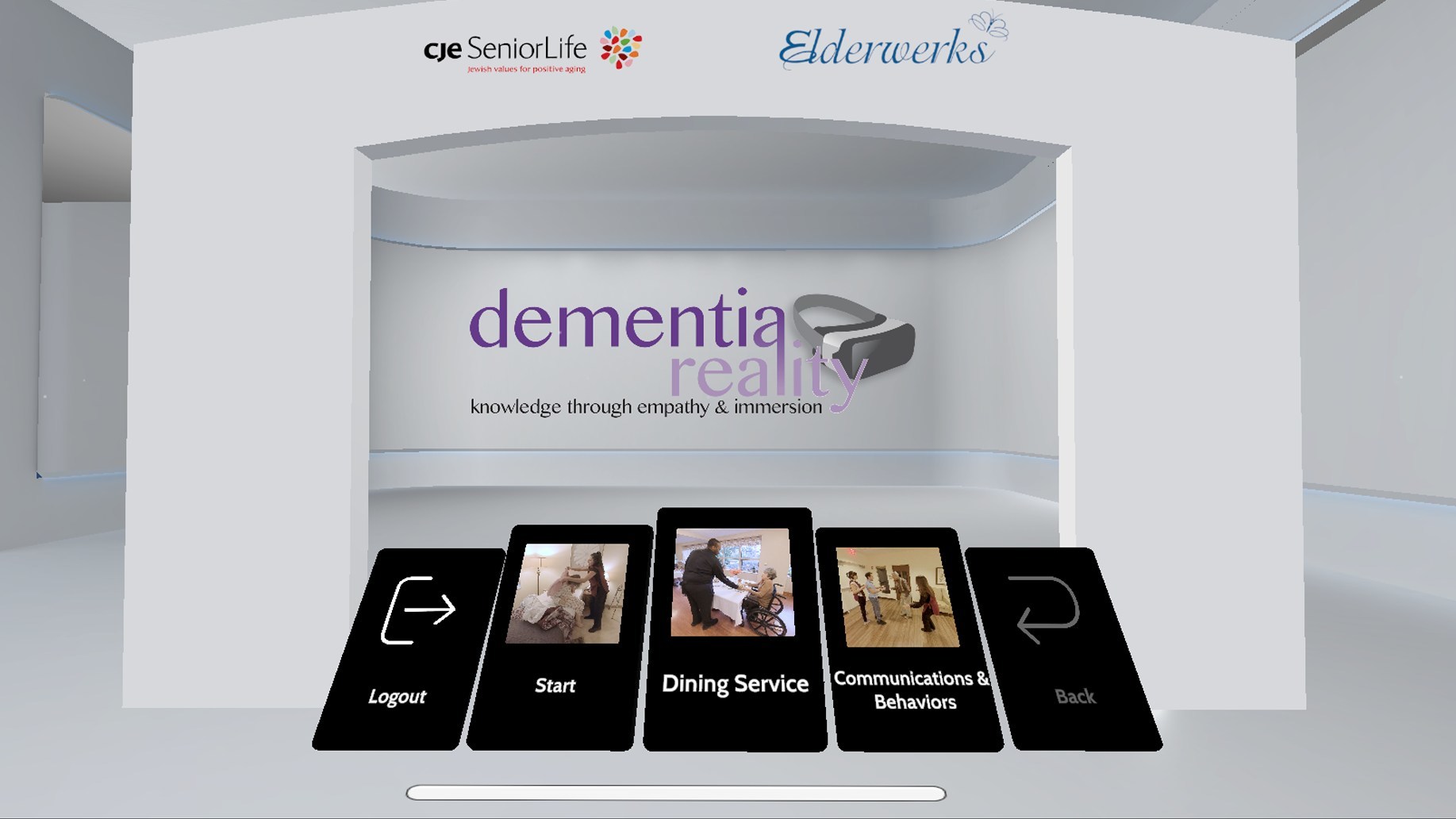
CJE SeniorLife and Elderwerks worked with VR Vision to help long-term care workers understand, and respond with empathy to, people living with dementia.
Built for long-term caregivers on Meta Quest 2, for an organization that serves 20,000 older adults and family members each year in the Chicago area.
Read the CJE Elderwerks case studyHow is a healthcare VR training program delivered?
Licensed modules reach a field pilot in 1 to 2 months. Custom builds reach a pilot in 3 to 4 months. VR Vision handles content, headsets, deployment and support, so your team is not running a software project on the side.
Discovery
Pick the tasks that carry the most risk, cost or training time, and agree how success will be measured.
Build or configure
License existing modules or build custom simulations from your drawings, photos, video and work methods.
Pilot
Run the training with a real group of learners, collect Vision Portal data and refine the content with your SMEs.
Roll out and measure
Scale across sites, with completion, scores and error data tracked per learner.
Budgeting? A custom VR project typically runs $60K to $120K, and interactive 360 video runs $30K to $60K per module. Model your own payback with the VR training ROI calculator, or compare vendors with the Industrial VR Training Buyer's Guide.
Healthcare VR training: frequently asked questions
How is virtual reality used to train healthcare professionals?
VR places healthcare staff in realistic scenarios where they can practice procedures, communication and decision-making without risk to patients. It is especially effective for skills that are hard to teach in a classroom, such as empathy and responding to people living with dementia.
Can VR help caregivers understand dementia?
Yes. The dementia program VR Vision built with CJE SeniorLife and Elderwerks lets long-term caregivers experience everyday obstacles from the perspective of a person living with dementia, then practice how to respond.
Is VR training suitable for long-term care and senior care staff?
Yes. Standalone headsets need no PC or dedicated room, so staff can complete short modules between shifts, and every new hire receives the same standard of training.
How much does healthcare VR training cost?
A custom VR project from VR Vision typically costs $60K to $120K. Interactive 360 video costs $30K to $60K per module. Licensing existing modules, where they fit, is the fastest and lowest-cost way to start.
How long does it take to launch a healthcare VR training program?
Licensed modules reach a field pilot in 1 to 2 months. Custom builds reach a pilot in 3 to 4 months, depending on the number of tasks and how quickly subject matter experts can review content.
Will it work with our IT, security and LMS requirements?
Vision Portal supports SSO, MFA, role-based permissions and an on-prem or air-gapped deployment option. VR Vision follows ISO 27001 practices and hosts on AWS, which holds the relevant certifications. LMS integration through SCORM 1.2, SCORM 2004 or xAPI is available on request.
Train for the moments that matter to patients
Book a 30-minute demo to see care scenarios in VR and what a pilot for your staff would look like.